

Energy Saving Week 2025 is here — and it’s the perfect time for Northern Ireland homeowners to take a closer look at how their home uses (and loses!) energy. With rising interest in renewable technologies and new measures announced in the UK Autumn Budget, now is the ideal moment to make your home more efficient, comfortable, and cost-effective.
This guide breaks down everything you need to know — from insulation and smart heating to heat pumps, solar panels, and NI-specific grants.
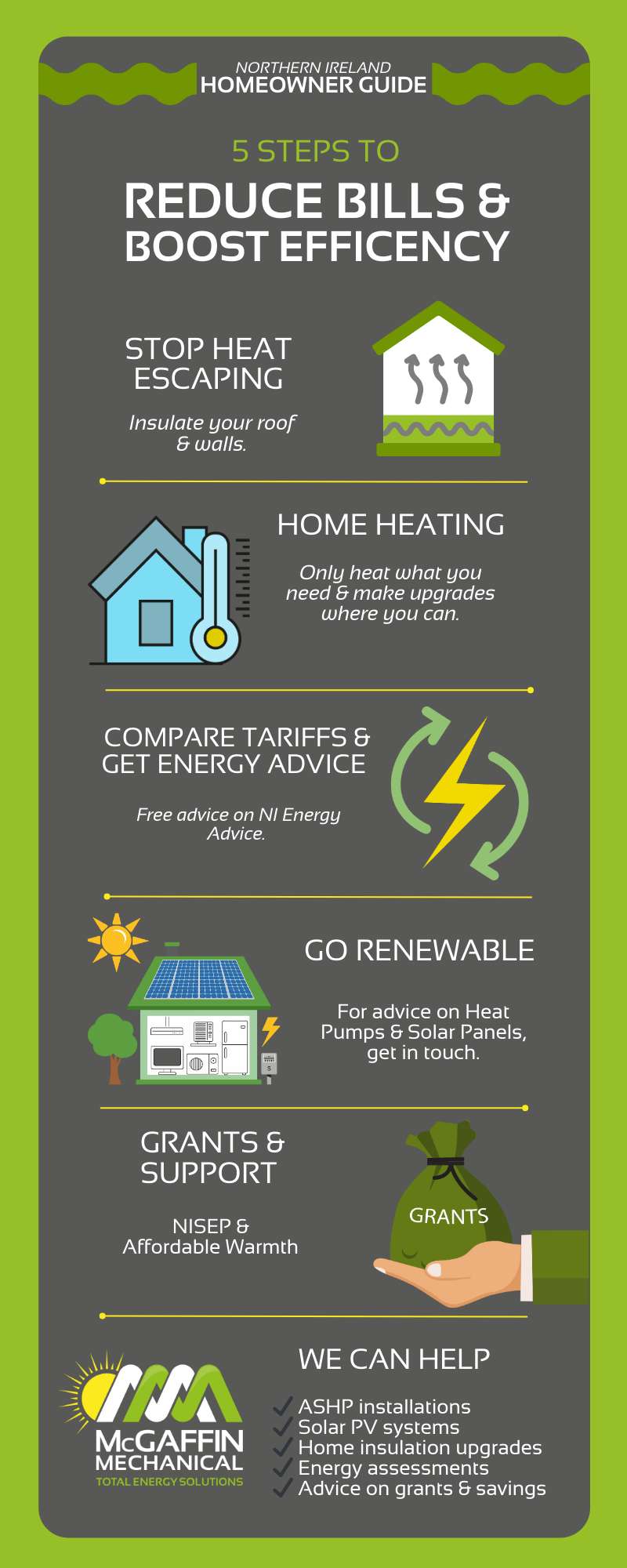
1. Stop Heat Escaping
Heat can escape through your roof, walls and even your hot water tank — and most homes in Northern Ireland still aren’t insulated to the recommended levels.
Quick wins:
-
Loft insulation (recommended minimum: 270mm)
-
Hot water cylinder jackets
-
Upgrading older insulation that’s no longer effective
These upgrades keep your home warmer for longer, reduce energy waste and significantly cut heating bills.
2. Be Smart with Your Home Heating
Small changes can lead to big savings:
-
Use thermostats and radiator valves correctly
-
Set your heating to match your daily routine
-
Lowering your thermostat by just 1°C can save £80–£130 per year
-
Electric storage heater settings matter — especially the input/output controls
-
Insulate hot water cylinders for extra savings
Smart heating habits mean you’re only heating what you need — and nothing more.
3. Compare Tariffs & Get Energy Advice
Northern Ireland residents can save money simply by reviewing their energy tariffs.
Helpful tools & contacts:
-
Consumer Council tariff comparison tool (electricity & home heating oil)
-
NI Energy Advice Service:
0800 111 4455
NIEnergyAdvice@nihe.gov.uk
If you’re struggling with bills or need advice on grants, they offer free, tailored support.
4. Go Renewable: Heat Pumps & Solar Panels
As Northern Ireland moves toward a low-carbon future, renewable technologies are becoming more popular — and more efficient.
Air Source Heat Pumps (ASHPs)
-
Low-carbon alternative to oil or gas heating
-
Suitable for most NI homes
-
Can save 1,400–3,500kg of CO₂ per year
-
Highly efficient — producing more heat energy than they use in electricity
Solar PV Panels
-
Work even on cloudy days
-
A typical 3.5kWp system saves around 550kg of CO₂ annually
-
Can power your home appliances and even your EV
-
Export tariffs pay you for unused electricity
Best Results? Combine ASHP + Solar
This pairing maximises efficiency, reduces running costs and cuts carbon emissions dramatically — making it the strongest long-term investment for a future-proof home.
5. Grants & Support Available in NI
Northern Ireland has unique schemes separate from GB:
Available support:
-
NI Sustainable Energy Programme (NISEP) – grants for insulation & renewable tech
-
Affordable Warmth Scheme – for low-income households
-
NI Energy Advice Service – free, personalised guidance
-
Consumer Council oil & electricity price checkers
Before upgrading your home, it’s always worth checking what support you qualify for.
6. How McGaffin Mechanical Can Help
We support households across Northern Ireland with:
✔ ASHP installations
✔ Solar PV systems
✔ Home insulation upgrades
✔ Energy assessments
✔ Advice on grants and long-term savings
If you’re thinking about improving your home’s energy performance — there’s never been a better time.
Caveats
Oil-heated home: Based on a typical three-bedroom semi-detached house, with an 85% efficient oil boiler using an average oil tariff over the past 12 months of 5.5/kWh (56p/litre, based on £280 for 500 litres order) and average electricity tariff of 30.8p/kWh; correct as of October 2025.
Gas-heated home: Based on a typical three-bedroom semi-detached house, with an 89% efficient gas boiler using an average gas tariff of 9.0p/kWh and an average of electricity tariff of 30.8p/kWh; correct as of October 2025.
Electric-heated home: Based on a typical three-bedroom semi-detached house, with 100% efficient storage heaters, using an average off-peak Economy 7 electricity tariff of 16.7p/kWh, and peak-rate Economy 7 electricity tariff of 35.0p/kWh; correct as of October 2025.
You’ll also find more advice and tools on the Energy Saving Week Page.
Recent Comments